

Thermal Spray Coatings
Thermal Spray Coatings - for Wear, Heat and Corrosion Protection
Thermal spray coatings are at the core of what we do - helping to protect, restore and improve the performance of a wide range of components and surfaces.

What is Thermal Spraying?
Thermal spraying (sometimes called metal spraying) is a process used to improve or repair the surface of solid materials. A coating is applied to a component to give it properties it wouldn’t otherwise have – such as better resistance to corrosion, wear, erosion or heat.
It’s also used when specific surface characteristics are needed, such as electrical insulation, conductivity, reduced friction, or chemical resistance. These coatings can extend the life of new components or bring worn ones back to working condition without the need for full replacement.
Unlike painting or plating, thermal spray doesn’t melt the base material. That means we can apply it to heat-sensitive components or those that need to keep their original shape and strength.
The Basics of Thermal Spraying
Thermal spraying involves feeding a material, usually in the form of a wire or powder, into a heat source such as a flame, electric arc or plasma. The material is melted or softened and then propelled onto a clean surface using compressed air or gas. Combined thermal and kinetic energy causes the particles to flatten or ’splat’ onto the surface, and onto each other, to produce a cohesive coating of successive layers.

What Are the Benefits of a Thermal Spray Coating?
- It’s a cold process, so the component itself doesn’t get damaged by heat
- The bond is mechanical, not chemical, making it safer for many materials
- A wide choice of coating materials can be used – from steels and stainless steels to copper, nickel alloys, ceramics, and carbides
- Coatings can be applied at a range of thicknesses, typically between 100 and 750 microns (and more if needed)
- The process works wherever there’s a clear line of sight – ideal for large or complex shapes
- Commonly used as an alternative to galvanising

Metallisation Ltd
Thermal Spray Coating Processes
Thermal spray isn’t just one process – it’s a group of techniques, each suited to different types of jobs. For example, corrosion control is usually carried out by Flame and Arc spray – as they are the least costly and quickest to implement, so are suitable for corrosion protection of larger structures. Plasma and HVOF sprays are used to apply engineering coatings and are of higher quality, density, and bond strength.
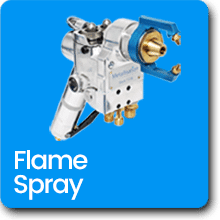


All of these coating processes can provide properties such as improved wear resistance, thermal barriers, electrical / thermal conductivity, hard-chrome replacement and insulation across a wide range of applications.
Typical Applications and Materials
A huge range of components benefit from thermal spraying, either as part of the original manufacturing process or as a reclamation or re-engineering technique. Some materials are used for small niche applications and other materials are sprayed by the tonne. Each application uses a combination of process and material to yield the desired benefits.
Protecting Large Steel Structures from Corrosion
One of the most widely used applications for thermal spraying is corrosion protection of structural steel. Using our flame spray and arc spray equipment, coatings of zinc, aluminium or zinc/aluminium alloy are applied to surfaces that would otherwise be vulnerable to rust and long term damage.
This method is commonly used on:
- Bridges and gantries
- Ships and offshore platforms
- Fencing, gates and railings
- Vehicles and trailers
It’s a reliable alternative to hot-dip galvanising, especially for large or complex structures, and can be applied on-site or in the factory.

Repairing and Reclaiming Worn or Damaged Parts
Another common use for thermal spraying is the repair and re-engineering of moving or rotating parts. These components are often expensive to replace, so thermal spray provides a cost-effective way to bring them back to working condition.
These coatings are commonly used on rotating or moving parts found in:
- Road and rail vehicles
- Ships and marine equipment
- Aircraft and aerospace parts
- Pumps, valves, and fluid seals
- Electric motors and generators
- Printing presses and rollers
- Paper production machinery
- Food processing machinery
- Chemical processing equipment
- Mining, quarrying, and earthmoving machinery
- Power generation turbines
- Machine tools and hydraulic systems
Spraying methods such as arc spray, flame spray, or HVOF (High Velocity Oxy-Fuel) are typically used. The choice of material depends on the operating environment and may include steels, nickel-based alloys, carbides, bronzes, copper, or stainless steel alloys.

Improving Performance of New Components
Many new parts are thermally sprayed during manufacture to give them additional surface properties that help them perform better and last longer.
Some typical examples include:
- Gate and ball valves used in oil and gas operations
- Rock drilling bits and downhole tools in the petrochemical industry
- Hydraulic piston rods and fluid seals
- Print rollers for industrial and commercial printing
- Aerospace combustion chambers
- Turbine blades
These components often operate in extreme environments. A thermal sprayed coating gives them the durability they need without compromising precision or performance.

Wish to Discuss a Project?
If you’re ready to find out how our thermal spray coating solutions could support your next project, we’d love to hear from you. Speak to our team today for expert advice, equipment options, or a technical chat about your requirements.