Corrosion Protection of Chemical Processing Plants
Thermal Spray Applications in the Chemical Industry
The chemical industry has several applications of corrosion, cavitation and erosion, often at high temperatures and pressures.

Why Corrosion Protection Matters in Chemical Processing
Corrosion is more than just surface rust. In a chemical plant, it can compromise entire systems. Steel tanks can thin over time, pipework can weaken, and supporting structures can lose their strength. If this is left untreated, small areas of damage can lead to leaks, contamination and production downtime.
A proactive approach to protecting against it is far more effective than waiting for problems to appear.
Corrosion Under Insulation
One of the most hidden and costly forms of corrosion in chemical plants is corrosion under insulation, often shortened to CUI. It occurs when moisture gets trapped beneath layers of thermal insulation wrapped around pipes, vessels or equipment. Because it is hidden from view, damage can spread unnoticed until it becomes severe. In the worst cases, CUI can cause corrosion rates up to 1mm/year.
A long proven method to protect against CUI is the use of Thermal Spray Aluminium (TSA). Protection in excess of 20 years has been shown in real life applications, leading to TSA being widely adopted by such companies as Shell and Exxon Mobil across their global refineries. The same conditions occur in downstream chemical processing plants.
High Temperature Corrosion
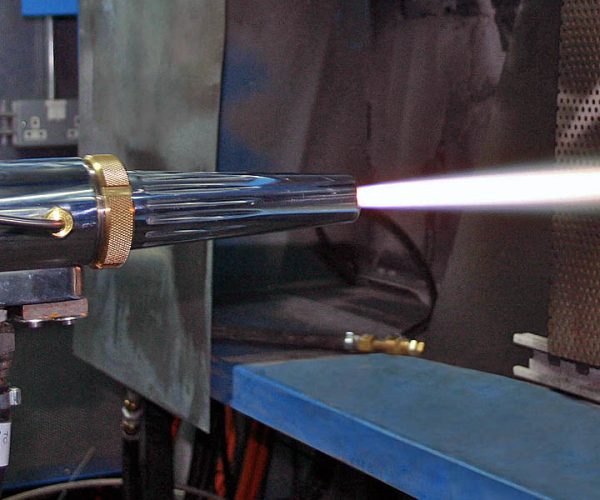
In several areas, high temperature corrosion can occur with complex corrosion environments and pressures. At times, erosion from the products being stored and pumped adds further complexity. There are several thermal spray solutions available to combat high temperature corrosion from arc sprayed Hastelloy or Inconel CRA’s (corrosion resistant alloys) through to the same materials applied by HVOF or HVAF.
How It Works in Practice
Imagine a steel storage tank that regularly comes into contact with acidic substances. Over time, even high grade steel can corrode. By applying a sprayed coating of aluminium or zinc, we create a sacrificial layer. This layer corrodes first, protecting the underlying steel. It’s a simple but highly effective way of adding years of service life to the tank.
For pipework, valves and fittings, thermal spray adds protection without significantly increasing weight or altering the shape of the components. It means plant operators can keep existing systems in place while improving their resistance to corrosion.
Please contact Metallisation for further advice on coating and process selection. You can also refer to the independent standard EN ISO 17834:2003 for guidance on coatings for protection against corrosion and oxidation at elevated temperatures.
Working With Us
If you’re looking for a partner to protect your assets from corrosion, our team is ready to help. Get in touch today to discuss your plant’s challenges and find out how our thermal spray coatings can provide the protection you need.
Contact Metallisation Ltd now to start a conversation about safeguarding the future of your chemical processing plant.