

Aerospace Thermal Spray Coatings
Thermal Spray Applications for the Aerospace Industry
Thermal spray coatings have become a key part of how modern aircraft stay lighter, stronger and more durable.

Reliable Protection for Aircraft Components
One of the most important sectors we support is aerospace – where performance, safety and reliability are absolutely critical. Through our thermal spray coating solutions, we help aircraft components stand up to the most demanding environments, whether in the air, on the ground or during manufacturing.
Why It Matters
If you’ve ever sat on a plane as an engineer and found yourself wondering how a jet engine can run at such high temperatures without melting, the answer lies in thermal barrier coatings – specifically ceramic coatings applied using the plasma spray process.
These coatings play a crucial role in protecting key engine components from extreme heat. But their value goes far beyond just heat resistance. Thermal spray coatings help prevent wear and damage before it begins. It’s about extending the service life of components, reducing the frequency of replacements, and keeping maintenance windows shorter. This is especially important for aircraft operators who rely on uptime to stay on schedule and within budget.
Common Uses in Aerospace Applications
Turbine Engines
Engines run at extremely high temperatures. Ceramic based coatings can help manage heat while protecting the metal underneath. These coatings can also reduce oxidation, which is when metal breaks down from exposure to air at high temperatures.
Compressor Components
Air compressors inside jet engines need to maintain tight tolerances and smooth operation. Thermal spray coatings help to create wear resistant surfaces that stand up to constant airflow, heat, and pressure. These coatings can also reduce friction, helping parts move more freely and with less energy loss.
Landing Gear
The landing gear takes a serious beating. Every take off and landing puts stress on these components, not to mention exposure to water, debris, and temperature changes.
Those polished hydraulic pistons you see on landing gear? Many are now coated using the High Velocity Oxygen Fuel (HVOF) process, replacing traditional chrome plating. This method applies a dense Tungsten Carbide layer that’s far more durable.
Actuators, Shafts, and Hydraulic Rods
These moving parts need smooth, hard surfaces to operate efficiently. Over time, friction and pressure can wear them down. Applying a thermal spray coating helps protect these components from wear, scoring, and corrosion.

How Does the Coating Process Work?
We use metal and thermal spray technology.
In simple terms, this involves heating a metal or alloy in wire or powder form, and spraying it onto a surface using a high speed stream of air or gas.
The coating sticks to the surface and quickly solidifies, forming a strong and reliable layer of protection. We can apply this to a wide range of metal parts without causing damage to the base material, which is a big plus – especially when dealing with sensitive or high value aerospace components.
Depending on the type of coating and application, we use different spray methods – including flame spray, arc spray, plasma spray, hvof and ID hvof. Each has its own strengths, and we’ll always choose the most suitable one based on the job at hand.
Working With Us
If you’re looking for ways to protect or improve your aerospace components, we’re here to help. Our thermal spray coating solutions are built around your needs, your timelines, and your challenges.
We can work with steel, aluminium, titanium and more – and we offer a range of coating options including zinc, aluminium, molybdenum and various alloys. If you’re unsure which direction to go in, we’ll guide you.
Our facilities are set up to handle both one-off jobs and large-scale runs, and we always focus on getting the details right. Consistency, precision and proper surface preparation are key to getting a strong, long lasting result.
And if you have your own production line? We can support you with advice, training or supply of thermal spray equipment – depending on what you need.
Aerospace Case Studies
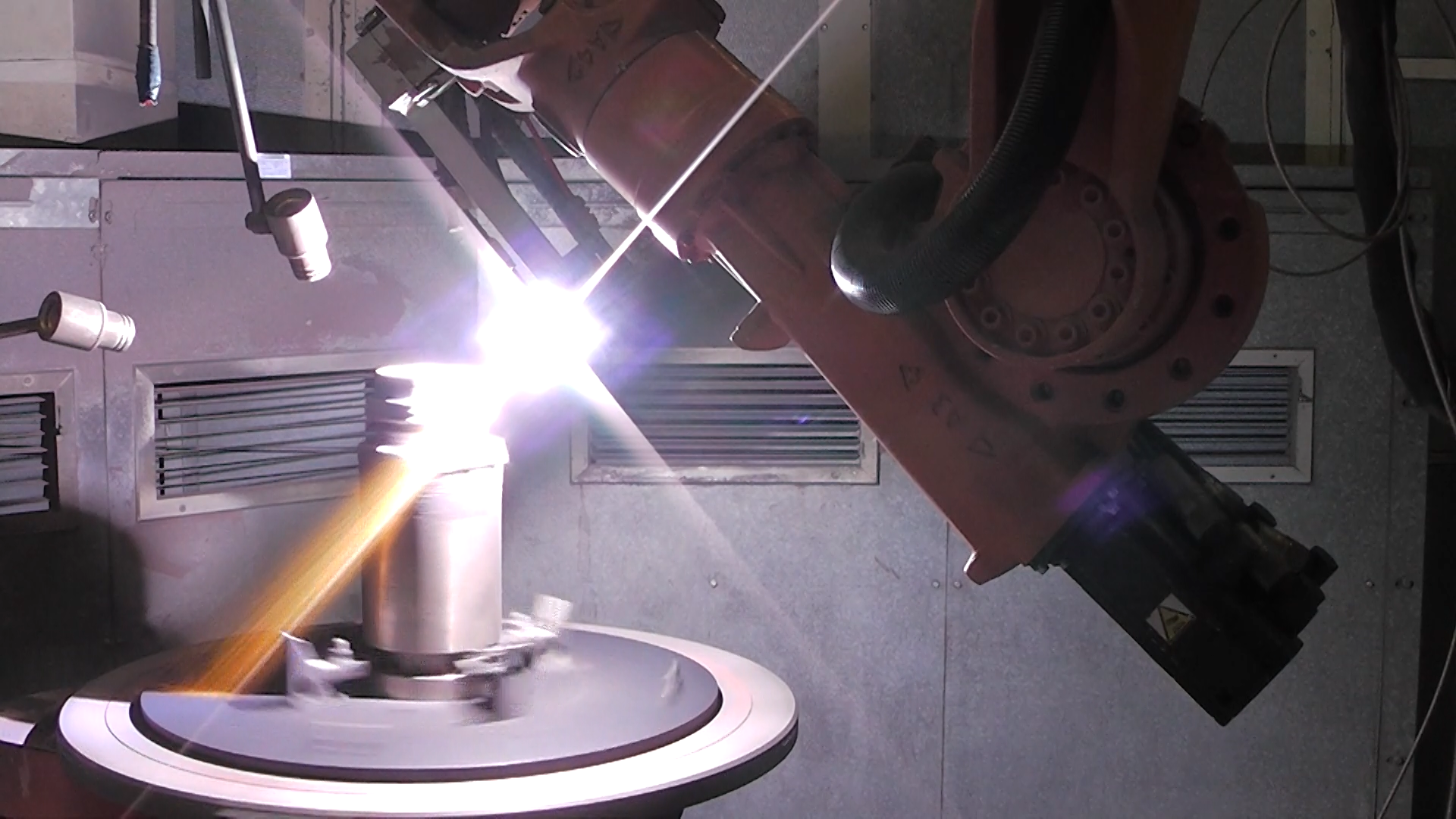
Most recently, we are working on research projects with Rolls-Royce and University of Nottingham to miniaturise a spray system to enable on-wing repairs of thermal barrier coatings.
We also have customers spraying electrical heater elements onto carbon fibre parts to efficiently stop ice formation at the touch of a button.